December 30, 2006

Gollum and Compassion

Meredith: A friend has been going through a very difficult time. As I listened and tried to be helpful, a tide of my own darkness welled up within me. As I looked at my friend, eye to eye, and as I listened deeply, I recognized that this pain, grief, sorrow, shame and self loathing my friend was sharing is inside of me, too. As I touched this angst, it felt as though I was tapping into a hidden corner of my own being that I rarely have the courage to recognize. It wasn't until I really felt this, and looked carefully at the ugly contents that I began to really understand my friend. It seems that in these sad and deep tributaries within ourselves we will find common ground that is fertile for compassion.
"Compassion is not a relationship between the healer and the wounded. It's a relationship between equals. Only when we know our own darkness well can we be present with the darkness of others. Compassion becomes real when we recognize our shared humanity."
--Pema Chodron

Friend: This darkness within us, it is a character like Tolkien's Gollum, and it appears to be universal in all human beings. We each have a different version, but it is a darkness that is part of our shared humanity. It does provide a common ground that allows for us to feel tenderness, connection, kindness and compassion.

Meredith: These dark images make me feel sooo sad, it is nearly unbearable to keep thinking about it for very long. And yet it feels so real and authentic, like "Yes, Gollum is finally out in the open, this terrible ugly secret I have been harboring. Now you know the truth of me."

Friend: Yes this is the stuff of which Gollum is made. Acknowledging our own darkness is excruciating, and yet...and yet... we must bear this woundedness, hold our sorrow, fear and confusion within an open heart. Holding these feelings, bearing them, allowing them to be and then to go of their own accord, however raw, exposed and vulnerable gives birth to warmth and compassion. I have indulged, much more often I have repressed, and both of these ways lead to further suffering. But to allow, to accept, to hold and bear with an open heart is sooooo hard, yet it is the way I have discovered to any real peace. And yes, this is a brand new discovery. My Gollum carries the key that brings light into the darkness, the light and warmth of consciousness which dispels shadow. As excruciatingly difficult as it is, as hard as it is to hold, allowing my Gollum to be - because it is, I genuinely feel wretched and unlovable in my darkest corners, I feel sorrow and fear and confusion - is paradoxically the key to healing my suffering.

I asked the universe for the power to heal suffering, and the universe showed me compassion. Compassion was the universe's response to my request for the power to heal the suffering of myself and others.

Pema Chodron also says this over and over, compassion is a key to healing suffering of self and other. And Sylvia Boorstein says it, too; "I think it's the awareness of the vulnerability to sorrow that human beings share that keeps me kind." Warmth and love and kindness come out of being present with our own darkness, our own vulnerability, suffering, sorrow, fear and confusion. It is this awareness of our shared vulnerability to pain that generates our love and warmth for ourselves and others. It is what heals and soothes suffering.

Meredith: Right. I, too, am finding that only when I am conscious of my own woundedness and suffering, conscious of my own darkness, can I be present with the woundedness and darkness of others. This "being present with" is compassion, and it is compassion that soothes and heals suffering.

December 27, 2006

A Walk

Often on Christmas morning, my family takes a walk. Although this December we have had very rainy and dark winter days here in Oregon, I have memories of unseasonable warm and sunny Christmas mornings in which we have gone out walking. Regardless of the weather, we walk with uplifted spirits and joyfulness in our hearts. Within us, something circulates about which we do not usually give words to. Rilke finds these words in this poem, reminding me of the ephemeral quality I sense moving through each of us.

A Walk

My eyes already touch the sunny hill,
going far ahead of the road I have begun.
So we are grasped by what we cannot grasp;
it has its inner light, even from a distance----

and changes us, even if we do not reach it,
into something else, which, hardly sensing it, we already are;
a gesture waves us on, answering our own wave...
but what we feel is the wind in our faces.

-Ranier Maria Rilke

December 19, 2006

To Love Another

For one human being to love another: that is perhaps the most difficult of all our tasks, the ultimate, the last test and proof, the work for which all other work is but preparation. For this reason young people, who are beginners in everything, cannot yet know love: they have to learn it. With their whole being, with all their forces, gathered close about their lonely timid, upward-beating heart, they must learn to love. But learning-time is always a long, secluded time, and, so loving, for a long while ahead and far on into life, is—solitude, intensified and deepened loneness for him who loves. Love is at first not anything that means merging, giving over, and uniting with another (for what would a union be of something unclarified and unfinished, still subordinate—?), it is a high inducement to the individual to ripen, to become something in himself, to become world, to become world for himself for another’s sake, it is great exacting claim upon him, something that chooses him out and calls him to vast things.

From
letter seven in Letters to a Young Poet
—Rilke

December 15, 2006

What Do You See?


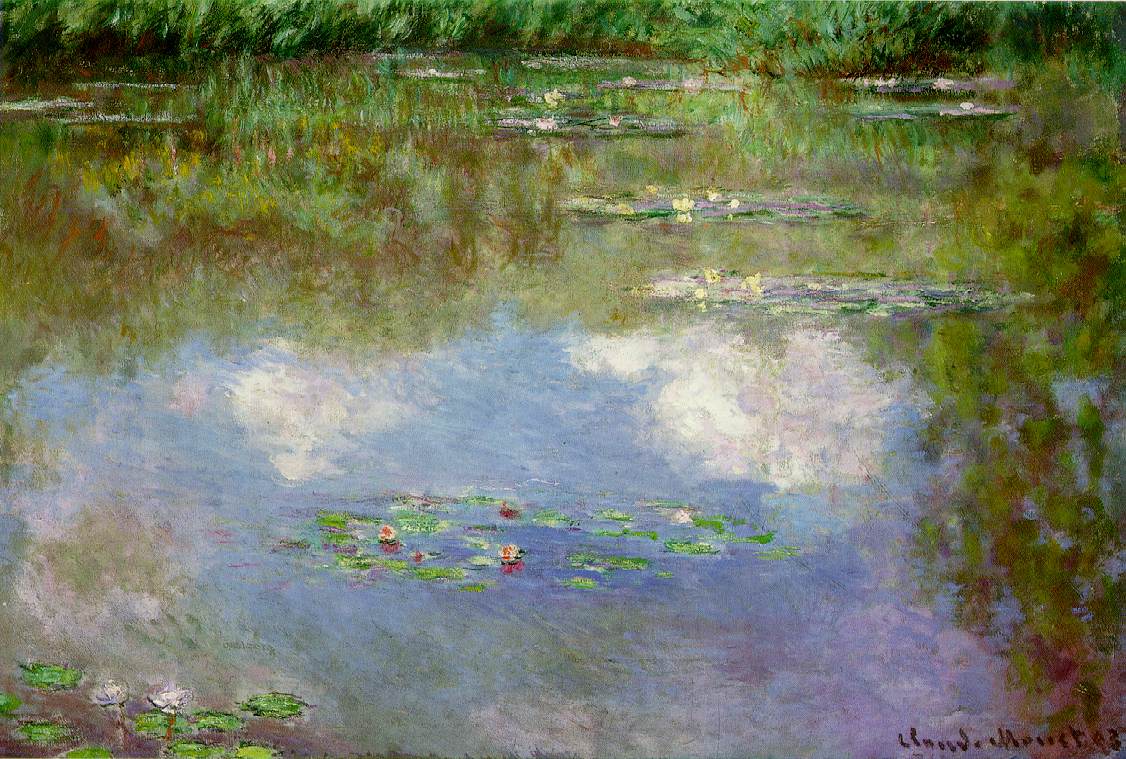
Robert Genn, author of The Painter's Keys, is traveling and visited Musee de L'Orangerie in Paris where the Claude Monet waterlily paintings are on display. He shared this experience:

I've been in these two rooms for so long that my stomach is concerned. A guard has already determined that I'm planning a heist. I'm sure she has alerted her supervisors. And then there's a man who has been in here almost as long as I. He moves from bench to bench. He has a round, friendly face and an honest smile. I find relief in pretending we have met. We talk in hushed, religious tones. He is M. LeClerc, an actuary from Poitiers, in Paris for four days. He thinks I'm an American. I tell him I'm from Canada. "What do you see here?" I ask him.

"I know nothing about art," he tells me, "But every time I come to Paris I enter these rooms. The collection was closed for some six years and Paris was very dull. These are sublime things. They are beyond words or expressions. They cannot be categorized or listed. In winter they take you to spring. They bring my boyhood and my home. Maybe God is in these things. What do I see? I see sadness and I see beauty. What else do we need? What else do we have?" His face is flushed, his eyes moist. "But then, who am I to say?" he asks. "I know nothing about art. Do you have such experiences in Canada?"

December 8, 2006

My Life, My Soul

Ten years ago.....
I turned my face for a moment
and it became my life.

Sometimes I go about pitying myself,
and all along
my soul is being blown by great winds across the sky.

—Ojibway saying

December 6, 2006

Obos


Robert Genn, author of the newsletter, The Painter’s Keys recently wrote about Obos, a Japanese term for a pile of rocks, often only three, one on top of another. He writes, “The obos merely says, "I was here." Being an unusual configuration, it is obviously from the hand of man. Further, if it is knocked down or desecrated, it is easily rebuilt. There can be one at the bottom of the garden or in a private corner of a public park."

"Obos is a destination, a sanctuary, a shrine and a focal point that reminds us that we work with our hands. We are builders and what we build is sacred. Obos may appear inconsequential and be unnoticed by a casual passersby. It's a private tribute to something higher, something we might be striving for but find difficult to attain. Approach obos with a relaxed, curious mind. It can help with answers to questions not consciously asked. Obos gives pause, a contemplative thought or a new direction, a respite from clutter, a rededication to our struggle and an affirmation of the value of our personal effort. Obos is the carrier of a golden secret. Obos is like art itself. "


Photo by Joanna McKasy

December 4, 2006

Limitless Whole

The true person is
not like anyone in particular;
but like the deep blue color
of the limitless sky,
it is everyone,
everywhere in the world.

Dogen (1200-1253)

I am reminded of both the limitless Whole in harmony with the someone in particular. Heaven and earth, sky and clouds, this wonderful manifestation of the many in the one, of emptiness as form.

So much of our daily living has been dominated soley by the conditioned, that most of us are unconscious of our true nature as "not anyone in particular" but like the sky, everyone and everything, everywhere in the world.

~Aki

December 1, 2006

Miracles of Each Moment


The above artwork is by Kazuaki Tanahashi, author of Brush Mind. In his book, Kazuaki writes,
"There is no need to imagine before you paint. Painting brings forth imagination."
No special conditions are needed to write, paint, or begin a creative endeavor. Though it feels risky, we can have confidence in the life-giving capacity of risk. One brush stroke leads to another, one word leads to another, one note on a song sheet calls forth the next. All we have to do is begin. Our willingness to risk brings the moment, ourselves and our work to life in a way that did not exist just moments before.

November 30, 2006

This is The Hour


We have been telling the people that this is the Eleventh Hour.

Now you must go back and tell the people that this is The Hour.

And there are things to be considered. Where are you living? What are you doing? What are your relationships? Are you in the right relation? Where is your water? Know your garden.

It is time to speak your truth: Create your community. Be good to each other.

And do not look outside yourself for the leader: This could be a good time!

There is a river flowing now very fast. It is so great and swift that there are those who will be afraid. They will try to hold onto the shore. They will feel they are being torn apart and they will suffer greatly.

Know the river has its destination.

The elders say we must let go of the shore, and push off into the river, keep our eyes open, and our head above the water.

See who is in there and celebrate. At this time in history, we are to take nothing personally. Least of all ourselves. For the moment that we do, our spiritual growth and journey comes to a halt.

The time of the lone wolf is over. Gather yourselves! Banish the word struggle from your attitude and your vocabulary. All that you do now must be done in a sacred manner... and in celebration.

We are the ones we've been waiting for...

The Great River - The Elders, Hopi Nation, Oraibi, Arizona

November 29, 2006

Broken Gong

Like a broken gong
Be still, be silent.
Know the stillness of freedom
Where there is no more striving.

- Buddha in the Dhammapada

It is touching that this awakened one used the brokenness of the gong to illustrate the stillness of absolute freedom. Such brilliance. At once it acknowledges the sad aspect of this human existence, so filled with brokenness: broken hearts, broken bodies, broken intellects and mental capacities, broken personalities and emotions, broken selves, and then leaps courageously and confidently to the joy of freedom found in silence and stillness, where there is no more striving. This is the sad/joyful heart that is awake.

~Aki

November 27, 2006

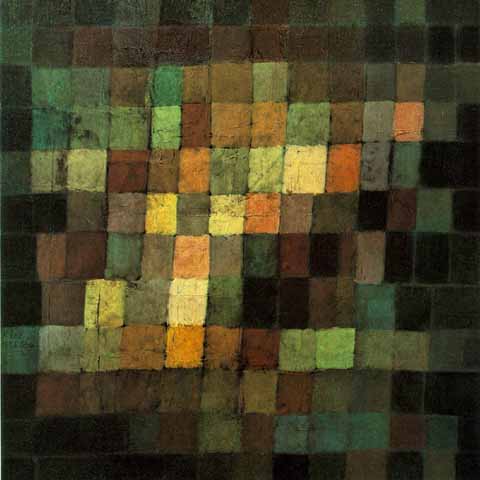
Ancient Sound


"When I paint what you know, I bore you.

When I paint what I know, I bore me.

So I paint what I don't know."


Paul Klee

November 24, 2006

Gateway of Awe

The hidden stitch of light sewn into the fabric of all of life is part of who and what we are.

This teaching of the universality of creative sparks implies that whether we are answering the telephone, changing the baby, riding the subway, or writing a poem, we are in touch with the creative source of life itself. Everything we encounter provides the same opportunity for us to meet the creative source: the play of early morning sunlight on our eyelids, the smooth cloth of the pillowcase beneath our cheek, the cutting of carrots and celery. But we must remember that being in touch with the creative is not just a matter of what we come upon as we move though our day. It is right here, the teaching says, in ourselves. When we learn to see with the eyes of the creative itself, every moment is an opportunity for new expression. We are always standing at a gateway of awe.
~Peter Levine

November 23, 2006

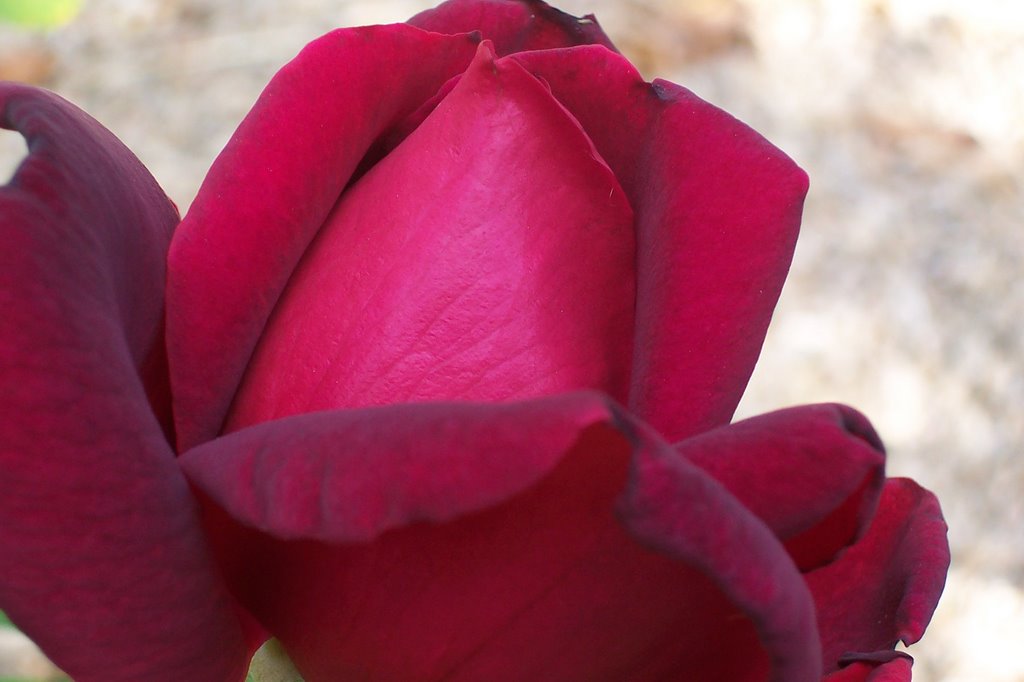
Thankful

For roses blooming on Thanksgiving

November 20, 2006

Silent Language


Silence is the language of God. All else is poor translation. In order to hear that language, we must learn to be still and to rest in God.

~Thomas Merton

Hear Me Calling

On the night when you cross the street
from your shop and your house
to the cemetery,
you'll hear me calling you from inside
the open grave, and you'll realize
how we've always been together.
I am the clear consciousness-core
of your being, the same in
ecstasy as in self-hating fatigue.
That night, when you escape the fear of snakebite
and all irritation with the ants, you'll hear
my familiar voice, see the candle being lit,
smell the incense, the surprised meal fixed
by the lover inside all your other lovers.
This heart-tumult is my signal
to you igniting in the tomb.
So don't fuss with the shroud
and the graveyard road dust.
Those get ripped open and washed away
in the music of our finally meeting.
And don't look for me in a human shape.
I am inside your looking. No room
for form with love this strong.
Beat the drum and let the poets speak.
This is the day of purification for those who
are already mature and initiated into what love is.
No need to wait until we die!
There's more to want here than money
and being famous and bites of roasted meat.
Now, what shall we call this new sort of gazing-house
that has opened in our town where people sit
quietly and pour out their glancing
like light, like answering?


~Rumi

November 18, 2006

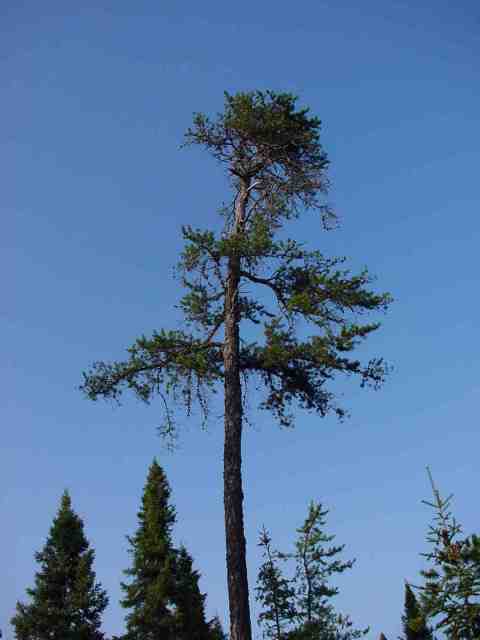
Integrity


Jack pines... are not lumber trees [and they] won't win many beauty contests, either. But to me this valiant old tree, solitary on its own rock point, is as beautiful as a living thing can be... In the calligraphy of its shape against the sky is written strength of character and perseverance, survival of wind, drought, cold, heat, disease... In its silence it speaks of wholeness...and integrity that comes from being what you are.


Douglas Wood, Fawn Island

November 16, 2006

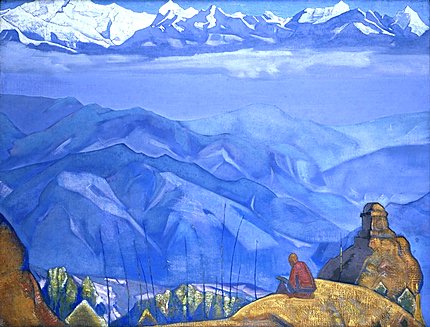
Sonada Monastery


"Make of yourself a light,"
I used to hear
from Buddha's long-lost lips
each day as I woke before dawn
in this mountain hermitage.
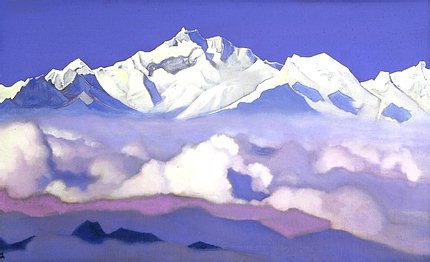
The five-peaked jeweled mountain
Kanchenjunga
towers over the Darjeeling horizon
as I start a fire for tea
and prepare my morning prayers.

Kalu Rinpoche, 1973
~~~
Painting: Monty & Cookie

November 15, 2006

Hidden Names

I was speaking with a rabbi friend some time ago about what mystical Judaism calls the hidden names of God. In this tradition it is said that the name of the Divine cannot truly be known. Oneness, the Divine Plenty, the Infinite, the Nameless One – these and many other names have been offered for what cannot be named. I told my friend that I loved that we try to say what can’t be said and hear what can’t be heard. It’s a good sign – a sign that in our species creativity is well and alive.

“But,” I said, “I am sometimes daunted by such grand names. I prefer a simpler name, one that rolls off the tongue. One I can say on a train.”

When my friend heard this he looked at me with great excitement. The love he feels for the world filled his eyes.

“But didn’t you know?” he said. “It’s the secret of secrets, the joy of joys: One of the hidden names is Yes! And another is Now!"

~Peter Levitt

November 13, 2006

The Ancient Masters

didn't try to educate the people,
but kindly taught them to not-know.

When they think that they know the answers,
people are difficult to guide.
When they know that they don't know,
people can find their own way.


The Tao Te Ching, 65
Stephen Mitchell

November 11, 2006

The Sacred Breath

The seasons have changed - burrr! As we move deeper into autumn, merging toward winter, I have been curling up near the woodstove with a good book in the evenings, enjoying warmth and candlelight near the sweet presence of my Beloved and my pets. These are simple moments, bathed in sacredness.

On Saturdays, I become a 'weekend warrior' with my studies. Most weekends this past month I have been to trainings and to school in Portland, which is three hours from my home. This weekend, it feels so good to just be home. One recent weekend I was away for a five-day silent meditation retreat. It was, in a word, a blissful experience. To have the luxury to take five days from the busy-ness of my life was so refreshing to my soul. I really was able to calm, quiet, and touch that within me that begs to be listened to.

One of the things the meditation teacher Frank Ostaseski offered was an instruction on listening deeply to our bodies. What is our body telling us? He had us tune in to what ever was most present in our awareness in this moment - an ache in the knee, a burning in the throat, a sensation of tears in the eyes, an itch, etc. And then, we watched the sensations move through us, changing from this moment to the next. This is the way truth is revealed, he said. It was amazing the depth of experience that just this noticing was able to offer. We touched not only the feeling in our bodies, but the sadness that rose up with it, or the longing, the gratitude, or warmth and love - all these qualities that just seemed to emerge clearly in these moments of listening in silence. Whenever this felt destabilizing, or passed on naturally, without manipulating, we returned our focus to our own breath.

Of our breath my teacher said, "We touch the sacred with each breath. With each breath, we just keep dipping into the sacred." I thought that was so beautiful! My teacher reminded us that breath animates all of life - and this is surely a sacred quality. He reminded us of the scriptures in Genesis, which all begin with the word. God spoke, “Let there be light,” and there was light… and God said, “Let there be an expanse between the waters…” and there was...." My teacher said, this was true until it came to man. “God formed man from the dust of the ground and breathed into his nostrils the breath of life, and man became a living being.” So, he said, “Breath is the vehicle to return to God. This is the ground of all being. Breath is the vehicle that takes us beyond thought, form, and into direct experience. The breath takes us beyond words, beyond our ideas, into our deepest, truest nature."

This teaching has been settling within me, quieting me, joining me - when I am mindful, with God's presence right here, right now, with each and every breath.

~With gratitude to Frank Ostaseski